Unravelling Stress

Ceri Pritchard • 28 February 2024

Unravelling the Art of Stress Management: A Journey to Inner Harmony


In our fast-paced modern world, stress has become an unwelcome companion for many. We find ourselves constantly juggling numerous responsibilities, battling deadlines, and striving to keep up with the ever-increasing demands of our personal and professional lives. However, amidst this chaos, it is crucial to remember that managing stress is not only essential for our well-being but also for our ability to lead a fulfilling life. In this blog, we embark on a transformative journey, exploring effective strategies and techniques for conquering stress and nurturing inner harmony.


1. Acknowledging the Stressors:

To effectively manage stress, it is imperative to identify the root causes. Some stressors may be external, such as work pressures, financial concerns, or relationship challenges. Others may be internal, like negative self-talk or unrealistic expectations. By recognising these stress triggers, we empower ourselves to take proactive steps towards alleviating their impact on our lives.


2. Embracing Mindfulness:

In our fast-paced lives, finding moments of stillness can be a true game-changer. Mindfulness, the practice of being fully present in the present moment, offers a sanctuary amidst the chaos. Engaging in mindfulness activities, such as meditation, deep breathing exercises, or even a simple walk in nature, allows us to cultivate a sense of calm and reconnect with our inner selves.


3. Prioritising Self-Care:

Neglecting our own needs often exacerbates stress levels. Thus, it is crucial to prioritise self-care as an integral part of stress management. This includes maintaining a balanced diet, getting regular exercise, and ensuring an adequate amount of sleep. Additionally, engaging in activities that bring joy and fulfillment, such as hobbies or spending quality time with loved ones, helps us recharge and build resilience against stress.


4. Cultivating Positive Coping Mechanisms:

When faced with stressful situations, we often resort to unhealthy coping mechanisms such as excessive consumption of alcohol or comfort eating. Instead, we can explore healthier alternatives that nurture our well-being. These may include journaling, seeking support from friends or professionals, practicing yoga or other forms of exercise, or engaging in creative outlets such as painting or playing an instrument. By consciously choosing positive coping mechanisms, we can effectively manage stress and channel our energy towards personal growth.


5. Nurturing a Supportive Network:

The power of human connection should never be underestimated when it comes to managing stress. Surrounding ourselves with a supportive network of friends, family, or even joining support groups allows us to share our burdens, gain valuable insights, and receive emotional encouragement. Sharing our experiences and listening to others' stories can offer a fresh perspective and remind us that we are not alone in our struggles.


In our hectic lives, stress can sometimes feel like an inevitable companion. However, armed with effective strategies and a genuine commitment to self-care, we can navigate the stormy seas of stress and emerge victoriously on the shores of inner harmony. By acknowledging our stressors, embracing mindfulness, prioritising self-care, cultivating positive coping mechanisms, and nurturing a supportive network, we reclaim control over our lives and pave the way for a more balanced and fulfilling existence. So, let us embark on this transformative journey together and unravel the art of stress management, one step at a time.
by Ceri Pritchard • 17 September 2026
Making the decision to contact a counsellor can feel like a big step and then another thought can quickly appear: “What on earth am I going to say?” If you've never experienced counselling before, it's completely understandable that the first session might feel unfamiliar. You don't need to arrive prepared You don't need to have your story organised. You don't need to know exactly why you feel the way you do and you certainly don't need to arrive with a list of things to talk about. Our first session is an opportunity for us to begin getting to know one another. We can talk about what has brought you to counselling, what you might like support with and what you hope counselling could offer you. But we go at your pace. Counselling isn't an interview I'm not sitting opposite you with a checklist waiting for the correct answers. Counselling is a relationship. Particularly in the beginning, it's about creating a space where you can gradually feel safe enough to explore what's happening for you. There may be things you're ready to talk about straight away and other things that take much longer. That's okay. Silence is okay too. Perhaps the most important question A first session isn't only about whether I think I can support you. It's also your opportunity to begin asking: “Does this feel like someone I could talk to?” The relationship you have with your counsellor matters. You are allowed to ask questions, take your time and notice how the experience feels. You don't have to tell your whole story in the first hour. Sometimes the first step is simply turning up and that's enough for us to begin.
by Ceri Pritchard • 17 September 2026
New Title
by Ceri Pritchard • 17 September 2026
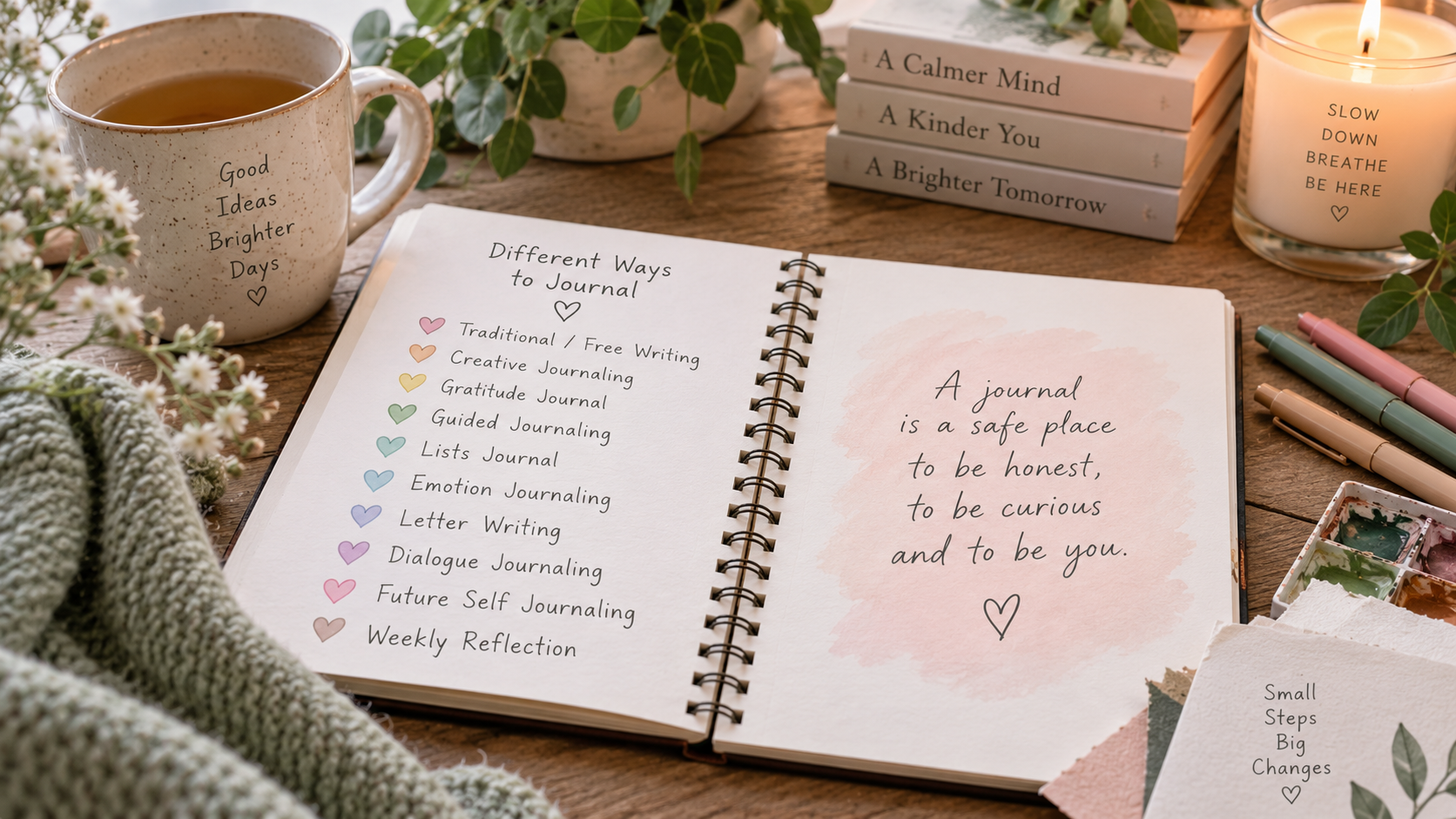
When we hear the word journaling, we often imagine sitting down with a notebook and writing pages and pages about our day. But journaling doesn't have to look like that. One of the things I love about journaling is the freedom it can give us to express ourselves in whatever way feels right for us. There are no marks, no spelling tests and no expectation that what you create has to make sense to anybody else. Your journal belongs to you. Finding your way F or some people, traditional or free journaling works beautifully. You simply begin writing and allow whatever is in your mind to come onto the page. For others, staring at a blank page can feel overwhelming. That's where different forms of journaling can help. You might enjoy creative journaling, using colour, drawings, doodles, photographs or words cut from magazines. A gratitude journal can involve simply noticing a few things you appreciated that day, including the very small things. Guided journaling gives you a question or prompt to respond to, while an emotion journal can help you notice and explore what you're feeling. You might even write a letter that you never intend to send, have a written dialogue with a part of yourself, write to your future self, or simply create lists. There really isn't a correct way. A space without judgement Sometimes writing or creating something on paper allows us to express thoughts and feelings that are difficult to say aloud. You don't have to analyse them or immediately understand them. Sometimes it is enough just to give them somewhere to go. Try givin g yourself five or ten minutes with a notebook and see what happens. Write, draw, scribble, make a list or simply finish the sentence: “Right now, I notice…” And remember, nobody is grading your journal. It doesn't need to be beautiful. It just needs to be yours. I have also created a free Types of Journaling resource with some different approaches and ideas to help you get started.